Can-Am Service Manuals: A Comprehensive Guide (Updated March 30, 2026)
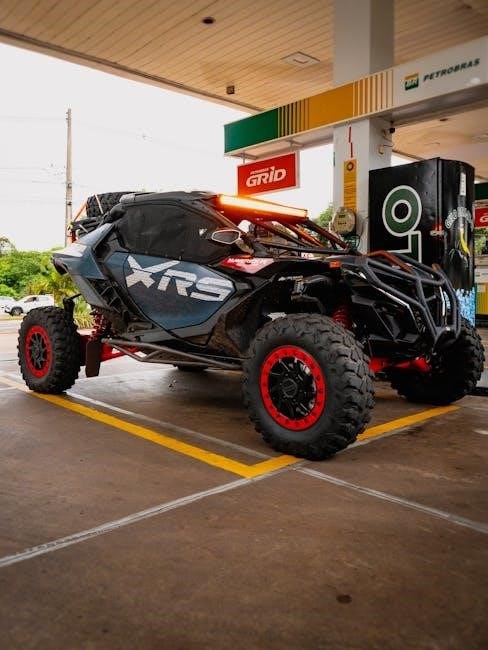
Today, March 30, 2026, access simplified troubleshooting for your Can-Am Commander 1000 with a dedicated service manual, offering essential guidance and insights.
What is a Can-Am Service Manual?
A Can-Am service manual is a detailed, comprehensive guide specifically created for maintaining and repairing Can-Am off-road vehicles, including ATVs, side-by-sides (like the Commander), and motorcycles. Think of it as the definitive resource for understanding every nut, bolt, and system within your machine.
These manuals aren’t just simple “how-to” guides; they are extensively detailed technical documents produced by BRP (Bombardier Recreational Products), the manufacturer of Can-Am vehicles, or reputable aftermarket publishers. They contain exploded diagrams, step-by-step instructions, torque specifications, and crucial safety information.
Essentially, a Can-Am service manual empowers owners and mechanics to perform everything from routine maintenance – oil changes, filter replacements – to complex repairs like engine overhauls or electrical system diagnostics. It’s designed to help you keep your Can-Am running smoothly and efficiently, extending its lifespan and maximizing your enjoyment. Accessing a manual simplifies troubleshooting common issues.
Why You Need a Can-Am Service Manual
Owning a Can-Am service manual is crucial for several reasons. Firstly, it saves you money by enabling you to perform maintenance and repairs yourself, avoiding costly trips to the dealership. Secondly, it provides accurate, vehicle-specific information, ensuring repairs are done correctly and safely.
Attempting repairs without a proper manual can lead to further damage, void warranties, or even create dangerous situations. A service manual offers detailed diagrams and torque specifications, preventing errors; Troubleshooting becomes significantly simpler with a dedicated guide.
Furthermore, understanding your machine’s inner workings through a manual enhances your overall ownership experience. It allows you to proactively address potential issues and maintain your Can-Am in optimal condition. Whether you’re a seasoned mechanic or a first-time owner, a service manual is an invaluable investment for any Can-Am enthusiast.
Types of Can-Am Service Manuals Available
Can-Am service manuals come in various formats to suit different preferences and needs. Official manuals, directly from BRP (Bombardier Recreational Products), are the most comprehensive, offering detailed procedures and specifications. Aftermarket manuals, produced by third-party publishers, often provide a more user-friendly approach, sometimes with enhanced illustrations.

You’ll find both digital manuals – accessible via computer, tablet, or smartphone – and traditional print manuals. Digital versions offer searchability and portability, while print manuals are ideal for garage use without relying on technology.
Some manuals cover a specific model year, while others encompass a range of years. Specialized manuals may focus on particular systems, like the engine or electrical components. Choosing the right type depends on your mechanical skills, preferred learning style, and the specific tasks you intend to perform on your Can-Am vehicle.
Official Can-Am Service Manuals (BRP)
BRP, the manufacturer of Can-Am vehicles, provides the most authoritative and detailed service manuals available. These official manuals are created by the engineers who designed and built your machine, ensuring accuracy and completeness. They cover every aspect of maintenance, repair, and overhaul, from routine servicing to complex engine rebuilds.

Official Can-Am manuals typically include exploded diagrams, detailed illustrations, torque specifications, and step-by-step instructions. They are often model-specific, guaranteeing relevance to your particular Can-Am. While generally more expensive than aftermarket options, the investment provides unparalleled access to factory-level information.
You can purchase these manuals directly from BRP’s website or through authorized Can-Am dealerships. Digital versions are increasingly common, offering convenient access and search functionality.
Aftermarket Can-Am Service Manuals
Aftermarket Can-Am service manuals present a cost-effective alternative to official BRP publications. These manuals are produced by third-party publishers, often offering a broader range of models covered within a single volume. While generally less detailed than official manuals, they still provide valuable repair and maintenance information for the DIY mechanic.
Aftermarket manuals frequently focus on common repairs and procedures, utilizing clear language and illustrations. They can be particularly useful for owners who need basic guidance for routine maintenance tasks. However, it’s crucial to verify the manual’s accuracy and completeness before relying on it for complex repairs.
Popular aftermarket providers include Haynes and Chilton. These manuals are widely available online and at automotive parts retailers, offering a convenient and affordable solution for Can-Am owners.
Digital vs. Print Can-Am Service Manuals
Choosing between digital and print Can-Am service manuals depends on individual preferences and working styles. Print manuals offer the advantage of being readily accessible without needing a device or power source, ideal for workshops lacking reliable electricity. They’re also less susceptible to damage from spills or drops.
Digital manuals, however, provide enhanced searchability, allowing quick location of specific information. Features like zoom functionality and interactive diagrams can simplify complex procedures. Many digital versions are available as downloadable PDFs or through subscription-based online platforms.
Consider the convenience of portability with digital manuals, accessible on tablets or laptops. However, ensure compatibility with your device and a reliable power source. Ultimately, the best choice balances accessibility, durability, and the features most valuable to your repair process.

Understanding Your Can-Am Model & Manual
Accurate identification of your Can-Am’s model year and sub-model is crucial for selecting the correct service manual, ensuring precise repair information and procedures.
Identifying Your Can-Am Model Year & Sub-Model
Precisely determining your Can-Am’s model year and specific sub-model is the foundational step before attempting any maintenance or repair work. This information dictates which service manual is compatible with your machine, as procedures and parts can vary significantly between years and even within the same model line.
Locate the Vehicle Identification Number (VIN), typically found stamped on the vehicle’s frame – often near the steering head or under the seat. The VIN contains coded information, including the year of manufacture. Decoding the VIN can be done using online VIN decoders specifically designed for Can-Am vehicles.
Additionally, check for factory labels or stickers affixed to the vehicle. These labels often display the model name, sub-model designation (e.g., XRS, XT, Limited), and the year of production. Referencing your original purchase documents or registration can also confirm this vital information. Accurate identification prevents using incorrect repair procedures and ensures compatibility with replacement parts.
Locating the Correct Service Manual for Your Model
Once you’ve accurately identified your Can-Am’s model year and sub-model, securing the corresponding service manual becomes paramount; Official BRP (Bombardier Recreational Products) manuals are the gold standard, offering comprehensive and factory-approved repair procedures. These can be purchased directly from the BRP website or authorized Can-Am dealerships.
When searching online, utilize precise search terms including the model name, year, and “service manual.” Be wary of generic manuals claiming to cover multiple years, as they may lack the specific details for your machine. Reputable aftermarket manual providers also exist, but verify their accuracy and compatibility before purchasing.
Always cross-reference the manual’s stated model coverage with your vehicle’s VIN and factory labels to ensure a perfect match. A mismatched manual can lead to incorrect repairs, potential damage, and safety hazards. Prioritize official BRP manuals whenever possible for the most reliable information.
Decoding Can-Am Model Numbers
Can-Am model numbers are more than just random characters; they’re a coded system revealing crucial information about your vehicle. Understanding this code is vital for locating the correct service manual and parts. Typically, a Can-Am model number begins with a series identifier, like ‘DS’ for Sport, ‘Commander’ for side-by-sides, or ‘Outlander’ for ATVs.
Following this, you’ll find numbers indicating engine displacement (e.g., 1000 for a 1000cc engine). Subsequent digits often denote specific sub-models, trim levels, or feature packages. For example, a ‘MAX’ designation usually signifies a longer wheelbase or enhanced features.
Referencing your Can-Am’s owner’s manual or the vehicle’s VIN plate will provide the complete and accurate model number. This number is essential when searching for service manuals, as it guarantees compatibility and ensures you have the correct repair procedures for your specific machine. Don’t rely on visual similarities alone!

Key Sections Found in a Can-Am Service Manual
Comprehensive manuals detail engine repair, suspension adjustments, electrical diagrams, and crucial troubleshooting steps for common Can-Am issues, ensuring effective maintenance.
Engine & Powertrain
The Engine & Powertrain section is the heart of any Can-Am service manual, providing detailed exploded views of the engine components, from the cylinder head to the crankshaft. It meticulously outlines procedures for complete engine rebuilds, valve adjustments, and piston replacements. Torque specifications are clearly listed for every bolt and fastener, crucial for maintaining engine integrity and preventing failures.
Furthermore, this section covers the powertrain, including the transmission, differential, and drive belt system. You’ll find step-by-step instructions for inspecting, repairing, and replacing these components. Diagrams illustrate the proper alignment of the drive belt and the correct procedures for adjusting the transmission. Troubleshooting guides pinpoint common issues like slipping belts, gear noise, and shifting problems, offering diagnostic steps and repair solutions. Detailed information on fuel injection systems, carburetors (if applicable), and ignition systems is also included, enabling comprehensive engine management.
Suspension, Steering & Brakes
The Suspension, Steering & Brakes section within a Can-Am service manual is critical for maintaining ride quality and safety. It provides detailed diagrams of the suspension components – shocks, springs, A-arms, and sway bars – alongside procedures for disassembly, inspection, and reassembly. You’ll find precise instructions for adjusting preload, compression, and rebound damping to optimize handling for various terrains and riding styles.
Steering system repairs are also thoroughly covered, including tie rod adjustments, steering rack maintenance, and power steering system diagnostics. The braking system section details the inspection and replacement of brake pads, rotors, and calipers, along with bleeding procedures for hydraulic brakes. Torque specifications are vital here, ensuring proper clamping force and preventing brake failure. Troubleshooting guides address common issues like uneven braking, squealing noises, and steering wander, offering clear diagnostic steps and repair solutions for a safe and controlled ride.
Electrical System & Wiring Diagrams
The Electrical System & Wiring Diagrams section is arguably one of the most complex, yet crucial, parts of a Can-Am service manual. It contains comprehensive wiring schematics, detailing every connection within the vehicle’s electrical network – from the battery and charging system to the lights, sensors, and electronic control units (ECUs). These diagrams are essential for diagnosing electrical faults, identifying short circuits, and performing repairs.
Detailed procedures are provided for testing components like the stator, regulator/rectifier, and various sensors using a multimeter. The manual will guide you through troubleshooting starting issues, lighting problems, and malfunctioning gauges. Understanding the color codes and connector locations is paramount. Furthermore, it outlines the process of replacing fuses, relays, and wiring harnesses. Proper use of this section, combined with a digital multimeter, empowers owners to resolve electrical issues efficiently and safely, restoring full functionality to their Can-Am.
Troubleshooting Common Issues
A dedicated Troubleshooting section within a Can-Am service manual is invaluable for quickly diagnosing and resolving frequently encountered problems. It moves beyond simply identifying symptoms, offering step-by-step diagnostic procedures to pinpoint the root cause. Common issues addressed include engine starting difficulties, overheating, fuel delivery problems, and transmission malfunctions.
This section typically employs a logical, flowchart-style approach, guiding the user through a series of tests and inspections; It details what to look for, what readings should be, and what corrective actions to take. For example, a no-start condition might lead you through checks of the battery, starter, fuel pump, and ignition system. The manual provides clear instructions, minimizing guesswork and reducing repair time. Utilizing this section effectively can save significant money on professional mechanic fees and get you back on the trail faster.

Using Your Can-Am Service Manual Effectively
Maximize your repair success by prioritizing safety, gathering the correct tools, and carefully understanding torque specifications and detailed diagrams within the manual.

Safety Precautions & Warnings
Prioritizing safety is paramount when working on your Can-Am vehicle. Always disconnect the battery’s negative terminal before commencing any electrical work to prevent accidental shorts and potential injury. Wear appropriate personal protective equipment (PPE), including safety glasses, gloves, and sturdy footwear, to shield against hazards.
Be extremely cautious when handling fuels, oils, and other fluids, as they can be flammable or harmful. Work in a well-ventilated area to avoid inhaling fumes. Support the vehicle securely with jack stands if lifting is required – never rely solely on a jack.
Heed all warnings and cautions detailed within the service manual itself. These are specifically designed to alert you to potential dangers associated with particular procedures. If you are unsure about any step, consult a qualified mechanic. Ignoring safety guidelines can lead to serious injury or damage to your Can-Am.
Tools & Equipment Required
Successfully utilizing a Can-Am service manual demands having the correct tools. A comprehensive set of metric sockets and wrenches is fundamental, alongside screwdrivers (Phillips and flathead) of various sizes. Torque wrenches are crucial for tightening fasteners to specified levels, preventing damage.
Specialized tools often prove necessary, including a multimeter for electrical diagnostics, pliers, and potentially pullers for removing stubborn components. Depending on the repair, you might need a chain breaker, bearing press, or specific Can-Am tools.
Essential equipment includes a well-lit workspace, jack and jack stands for safe vehicle elevation, and fluid drain pans. A repair manual often details specific tool requirements for each procedure; Investing in quality tools ensures efficient and safe repairs, ultimately extending your Can-Am’s lifespan and performance.
Understanding Torque Specifications & Diagrams
Can-Am service manuals heavily emphasize torque specifications – the precise tightness for each fastener. Ignoring these can lead to component failure or unsafe operation. Manuals present torque values in various units (Nm, ft-lbs, in-lbs); ensure you use the correct conversion and a calibrated torque wrench.
Diagrams are integral to understanding fastener locations and tightening sequences. These illustrations clearly show which bolts to tighten first, and in what order, to ensure even pressure distribution. Pay close attention to diagrams depicting exploded views of assemblies.
Proper torque application prevents stripping threads, warping components, and causing leaks. Always double-check the manual for specific instructions, and never exceed the specified torque value. Mastering torque specifications and diagram interpretation is vital for successful Can-Am maintenance and repair.